


Press Releases
Lawler Joins Problem Solvers Caucus to Introduce Four Bipartisan Bills to Address Gerrymandering Nationwide
Washington, D.C. ,
September 17, 2026
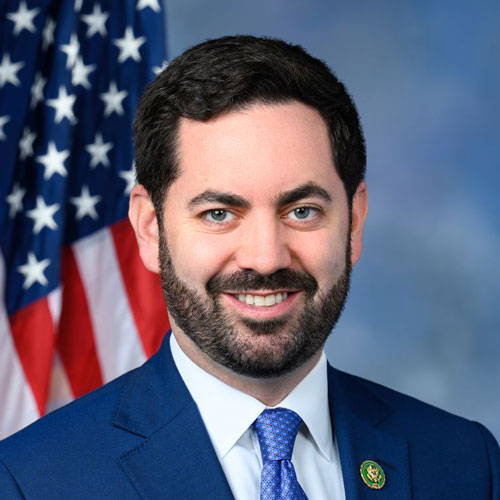
Washington, D.C. – 9/17/26… Yesterday, Congressman Mike Lawler (NY-17) joined the Problem Solvers Caucus Co-Chairs, Reps. Brian Fitzpatrick (PA-01) and Tom Suozzi (NY-03) announced four bipartisan bills aimed at establishing clearer and more consistent rules for congressional redistricting across the country. Reps. Lawler and Salud Carbajal (CA-24) introduced their bipartisan Problem Solvers Mapdrawing Accountability and Principled Standards (MAPS) Act. The legislation is the result of months of work by the Caucus’ bipartisan Gerrymandering Working Group, led by Reps. Jeff Hurd (R-CO-03) and Ed Case (D-HI-01). The Caucus previously released its Gerrymandering Reform Framework outlining four areas for congressional action: banning mid-decade redistricting, establishing nationwide standards for drawing congressional districts, reducing partisan influence in the map-drawing process, and creating a consistent federal process for resolving redistricting challenges. “Congressional districts should be drawn around communities, not political interests. The Problem Solvers MAPS Act establishes clear, commonsense standards to stop partisan gerrymandering and ensure districts are fairly drawn without favoring any one candidate or party. Politicians in states like New York and Texas should not be able to choose their elected representatives - under a democracy, that power is reserved for the people. I’m proud to work with Rep. Carbajal and our colleagues in the Problem Solvers Caucus to advance a bipartisan approach that puts voters first,” said Congressman Lawler. “This Problem Solvers MAPS Act is really about putting some commonsense guardrails around the redistricting process. When mapmakers do not have clear standards to follow, it becomes much easier for politics to take over. Every state is different, and no two congressional districts are going to look exactly alike, but the basic rules should be fair and consistent, no matter where you live across the country. That is what the Problem Solvers MAPS Act is trying to do: give states clear rules to follow and give voters more confidence that their districts were drawn for the right reasons,” said Congressman Carbajal. Members of the Caucus formally unveiled three additional pieces of the four-bill legislative package supporting their Gerrymandering Framework. Those bills include:
“[Gerrymandering] is a problem that both parties are guilty of. It’s a power issue, not a party issue. Every party that has the opportunity to do it has capitalized on it, and there needs to be a group of individuals and patriotic Americans that say no more because everybody agrees, even the people that do it, by the way, that it is corrosive to democracy, but they are justifying this as this tit-for-tat; meanwhile, the American people suffer,” said Co-Chair Fitzpatrick. “Gerrymandering is bad for America. It weakens the will of the voters, erodes public trust, and creates safe seats that reward extremism and disincentivize thoughtful, bipartisan collaboration. I’m proud our caucus is leading on this framework to take politics out of redistricting and restore confidence in a system where voters choose their representatives, not the other way around,” said Co-Chair Suozzi. Congressman Lawler is one of the most bipartisan members of Congress and represents New York's 17th Congressional District, which is just north of New York City and contains all or parts of Rockland, Putnam, Dutchess, and Westchester Counties. He was rated the most effective freshman lawmaker in the 118th Congress, 8th overall, surpassing dozens of committee chairs. ### |