


Press Releases
Congressman Lawler Expands Definition of Professional Degrees in New Bill
Washington, D.C. ,
December 17, 2025
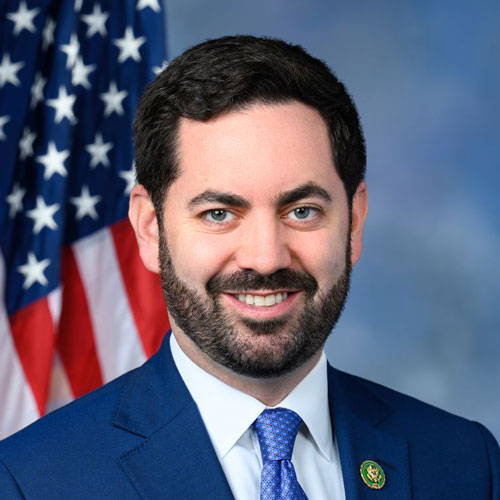
Washington, D.C. - 12/17/25… Today, Congressman Mike Lawler (NY-17) introduced the Professional Student Degree Act, a bill that amends the Higher Education Act to define “professional degree” and lists the graduate programs which meet the criteria. The Working Families Tax Cut legislation modified the annual federal student loan caps for students in graduate programs. The law caps traditional graduate education at $20,500 per year and $100,000 overall. But for graduate students seeking professional degrees, this limit is raised to $50,000 per year and $200,000 overall. It refers to an existing regulatory definition of “professional degree” to determine which programs qualify for which cap. To further clarify congressional intent, the Professional Student Degree Act, codifies the definition currently in regulation. It then adds to the existing list of examples to enumerate more programs that meet the standards set in the definition. In addition to programs already identified, the bill lists nursing, physical therapy, occupational therapy, ministry, social work, audiology, physician assistant, public health, business administration and management, accounting, architecture, secondary education, and special education. “Any degree that fits the specified criteria in the ‘professional degree’ definition should qualify for higher loan limits. For so many essential workers that need advanced degrees and licenses to simply do their job, it will make all the difference. The Professional Student Degree Act will ensure that students pursuing essential degrees such as nursing, social work, physical therapy, and more are able to access the full range of federal student loan benefits, just as their peers in other professional fields,” said Congressman Lawler. Endorsing organizations include: American Academy of Audiology, American Academy of Physician Associates, American Association of State Colleges and Universities, American Council on Education, American Institute of Architects, American Indian Higher Education Consortium, American Institute of Architecture Students, American Physical Therapy Association, Association of Collegiate Schools of Architecture, Asian Pacific Americans in Higher Education, Association of Jesuit Colleges and Universities (AJCU), Association of Public and Land-grant Universities, Association of Public Land-grant Universities, Association of Independent California Colleges and Universities, Columbia University, Commission on Independent Colleges & Universities, Dominican University New York, Hispanic Association of Colleges and Universities, National Association for Equal Opportunity in Higher Education, National Architectural Accrediting Board, National Coalition for Predominantly Black Institutions, National Council of Architectural Registration Boards, National Organization of Minority Architects, New York Medical College, OCA–Asian Pacific American Advocates, Oncology Nursing Society (ONS), Physician Assistant Education Association, Thurgood Marshall College Fund, Yale University, UNCF, Architecture Organizations Alliance, American Association Of Nurse Anesthesiology, the National Council of State Boards of Nursing, National League for Nursing, and the National Association of Pediatric Nurse Practitioners “The American Council on Education is proud to endorse H.R. 6718, the Professional Student Degree Act. This bill would ensure that students in numerous academic programs that prepare them for highly-skilled, in-demand professions have the federal financial aid they need to earn their degrees. Expanding the definition of professional student will ensure that students can enter critical fields such as nursing, education and social work, among others. We thank Rep. Lawler and his colleagues for this bill and encourage Congress to pass it quickly,” said the American Council on Education. “AAPA applauds Congressman Lawler for stepping up to introduce this legislation and ensure the final rule issued by ED reflects the legislative language and intent of what Congress enacted,” said AAPA President and Chair of the Board of Directors, Todd Pickard, DMSc, PA-C, DFAAPA, FASCO. “People who are going into healthcare should be able to have access to the loans they need so they can afford to complete their professional studies and take care of patients. That is the standard we should be working toward. If we fail to protect access to healthcare education today, we will feel the consequences in every clinic and every community tomorrow.” “The contributions and societal value of these graduates to their local communities are often overlooked or forgotten by policymakers, who focus on comparing debt-to-earnings ratios or amortization schedules. For these reasons, AASCU is proud to endorse H.R. 6718 and greatly appreciates your leadership on behalf of our nation’s postsecondary institutions and students. Thank you for your advocacy and recognition of the important role professional degree attainment plays in strengthening our national economy and local communities,” said Dr. Charles L. Welch, President and CEO of American Association of State Colleges and Universities. “On behalf of the American Academy of Audiology, the largest organization of, by, and for audiologists, dedicated to advancing quality hearing and balance care through professional development, education, research, and public awareness, I am writing to express our strong support for the HR. 6718, the Professional Student Degree Act, and to thank you for your leadership in introducing this important legislation,” said Patrick Gallagher, Executive Director of American Academy of Audiology. “Without the relief offered by your legislation, students already facing the loss of Grad PLUS loans and the imposition of newly implemented loan limits could be forced to abandon plans to attain a professional degree or switch areas of study entirely. This concern is especially prevalent among students seeking continued education in the health care and education fields. Originally charged by their state legislatures and communities with the education of vital nurses and teachers, RPUs continue to graduate most of the nation’s nurses, educators, social workers, and public health professionals. The contributions and societal value of these graduates to their local communities are often overlooked or forgotten by policymakers, who focus on comparing debt-to-earnings ratios or amortization schedules,” said Dr. Charles L. Welch, President and CEO of the American Association of State Colleges and Universities. “H.R. 6718 is a critical and constructive step toward mitigating these impacts and preserving access to professional education that supports the nation’s workforce needs. We appreciate your leadership on this issue and look forward to working with you to advance this bill and on future efforts to and strengthen graduate and professional education pathways,” said Kristen F. Soares President, Association of Independent California Colleges and Universities. “Many of these professions, in health and teaching fields, to name just a few, also happen to be in fields that bring value to communities, but are also facing shortages. In the new proposed regulatory language from the U.S. Department of Education, which defines a narrow list of professional degree programs, many professional career pathways would exclude students with economic need. Your legislation provides a reasonable, balanced solution to this problem by expanding the list of professional programs so that students pursuing service-oriented career paths have access to federal student loans. We are grateful for your leadership and look forward to working closely with your office to advance this important legislation,” said Jenny Smulson, Interim Executive Director and Vice President for Government Relations of the Association of Jesuit Colleges and Universities. Full text of the bill can be found HERE. Full letters of support from various endorsing organizations can be found below:
Congressman Lawler is one of the most bipartisan members of Congress and represents New York's 17th Congressional District, which is just north of New York City and contains all or parts of Rockland, Putnam, Dutchess, and Westchester Counties. He was rated the most effective freshman lawmaker in the 118th Congress, 8th overall, surpassing dozens of committee chairs. ### |