


In the News
Newsweek: Student Loan Update: Republicans Fight To Save Borrowers Thousands
By Suzanne Blake,
December 12, 2026
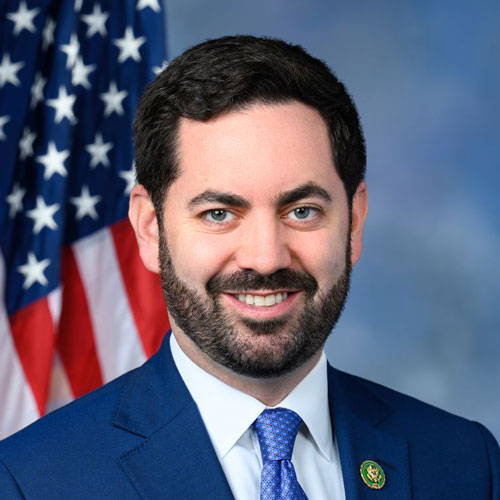
A group of mostly Republican lawmakers is pushing a proposal in the House that could dramatically reduce the cost of federal student loans by capping interest rates at 2 percent. This would save borrowers thousands of dollars over the life of their loans. But despite backing from both Republicans and one Democrat, the effort is facing resistance from an unexpected source: Democrats who say their own competing plan would provide even greater relief. The debate comes as millions of borrowers adjust to a rapidly changing student loan landscape after the end of the Biden-era SAVE repayment plan and major changes enacted by Republicans last year. This fight is a rare split in student loan politics. Republicans are advancing one of the most aggressive interest-rate reduction proposals introduced in Congress, while Democrats argue borrowers deserve even greater relief through complete interest elimination. For the roughly 43 million Americans with federal student loans, this could determine whether future student debt costs fall modestly or disappear entirely. What To KnowH.R. 2003, the Affordable Loans for Students Act, would reduce federal student loan interest rates to 2 percent. So far, the bill has been championed by Representative Michael Lawler, a New York Republican, alongside Florida Representatives Anna Paulina Luna, a Republican, and Jared Moskowitz, a Democrat. “Democrats have spent years talking about making college more affordable, but in an election year, they refuse to prioritize [a] commonsense solution because they don’t want to give Congressman Lawler any credit for delivering for borrowers," Scott Waters, Lawler's communications director, told Newsweek."No one should have to put off buying a home, starting a family, saving for retirement, or building a business because they’re being crushed by student loan interest," Waters said. Newsweek reached out to Luna and Moskowitz for comment. Democratic support has been minimal as the party instead chooses to back the Student Loan Interest Elimination Act, which would bring interest rates on federal student loans entirely to 0 percent while allowing refinancing for current borrowers. “No one's defending 8 or 9 percent on a grad loan,” Michael Ryan, a finance expert and the founder of MichaelRyanMoney.com, told Newsweek. “But Democrats are still fighting the borrowing caps that took effect July 1, and the death of SAVE. A bipartisan rate bill in August looks like Republicans score the win while Democrats lose on the bigger fight.” “Once a 2 percent cap passes, the rate conversation is closed for the next decade. The borrowing limits stay in place. That's the real tension, not whether lower rates sound good,” he added. Both the Republican and Democratic proposals aim to lower borrowing costs, but they take different approaches to paying for the changes. “Some lawmakers are beginning to separate lowering the cost of student loans from forgiving them altogether,” Alex Beene, a financial literacy instructor for the University of Tennessee at Martin, told Newsweek. “Reducing interest rates can help the argument that they are helping borrowers while still maintaining that the underlying debt should be repaid.” Republican Bill Would Slash Interest RatesThe Affordable Loans for Students Act (H.R. 2003) would amend federal law to lower interest rates on federal student loans to 2 percent and automatically modify many existing federal loans to reflect the lower rate. The legislation has become the focus of a discharge petition effort led by Luna, who is attempting to force a House floor vote by gathering signatures from a majority of House members. Under House rules, 218 signatures are required. Luna has argued that borrowers should not have to "spend their whole lives trying to pay off their debts." The proposal would reduce rates currently ranging from roughly 6.5 percent to 9 percent, depending on loan type. Critics have largely pointed to the potential cost, with the American Enterprise Institute estimating the measure could cost at least $30 billion annually. However, Democrats have their own reasons for refusing to support the bill. “The hesitation some Democrats have shown is more surprising given how central student-debt relief became to the party, but part of the problem may be political ownership,” Beene said. “Republicans have spent the past year rewriting the repayment system around lower federal spending, borrowing limits, and accountability, while Democrats have focused much of their energy on opposing those changes rather than finding areas where they can actually negotiate improvements. Lower interest rates could become one of the rare areas where a bipartisan compromise eventually comes to fruition.” Full List of Sponsors and Cosponsors: H.R. 2003Based on Congress and government legislative records, the bill's sponsors include:
Moskowitz is the sole Democratic supporter. Democrats Push an AlternativeMany Democrats have declined to support the Republican-backed effort because they prefer a competing proposal from Representative Joe Courtney of Connecticut and Senator Peter Welch of Vermont. Their legislation, the Student Loan Interest Elimination Act, would:
Courtney told Politico that his proposal is "actually fiscally more responsible," and said that Democrats should support the 0 percent approach instead of the Republican measure. “Democrats are not interested in playing politics, especially as Republicans have made the problem far worse by decapitating the Department of Education and forcing higher payments among many current borrowers,” Kevin Thompson, the CEO of 9i Capital Group and the host of the 9innings podcast, told Newsweek. “Secondly, this is utterly fiscally irresponsible. Providing 2 percent loan caps could cost the government more than $30 billion a year. What economics teaches us is that when you place caps on prices, you also have to account for the consequences.” Full List of Sponsors: Student Loan Interest Elimination ActThe sponsors and cosponsors of the Student Loan Interest Elimination Act are all Democrats and include:
How Much Could Borrowers Save?The exact savings would depend on loan size and repayment term, but both proposals could reduce interest costs significantly. For example, a borrower with a $40,000 federal student loan balance, roughly the average balance cited by supporters of the Democratic bill, could save many thousands of dollars in total interest payments if rates were reduced from the current levels of 7 to 9 percent. The Democratic plan would generally provide larger savings because it would eliminate interest entirely, while the Republican plan would leave borrowers paying 2 percent interest. “I think both parties want a political win when it comes to education reform,” Thompson said. “Republicans are taking major hits right now with all of the court challenges and major Department of Education reforms, forcing people into new repayment plans that, quite often, may result in higher monthly payments.” What Is the Likelihood It Will Pass?At this stage, the odds appear low for either bill. Several factors are working against H.R. 2003:
GovTrack estimates only about a 2 percent chance of enactment for H.R. 2003, and the Democratic bill faces similar obstacles. What Happens NextLuna's discharge petition must attract enough House support to force a vote. However, that is a difficult threshold and would require substantial Democratic backing. Meanwhile, Courtney and Welch are continuing to build support for their competing 0 percent interest proposal. But without broader bipartisan agreement, both bills face a steep uphill climb despite lawmakers’ growing concern about student debt affordability. “I don't think this gets through unless Republicans can push it through on their own,” Thompson said. “I also don't think it is fiscally responsible in its current form, and the unintended consequence could be reduced access to student loans moving forward.” Contact Newsweek editors on this story: Jason Lemon, Cristina Diciu, Sam Wilson. |